
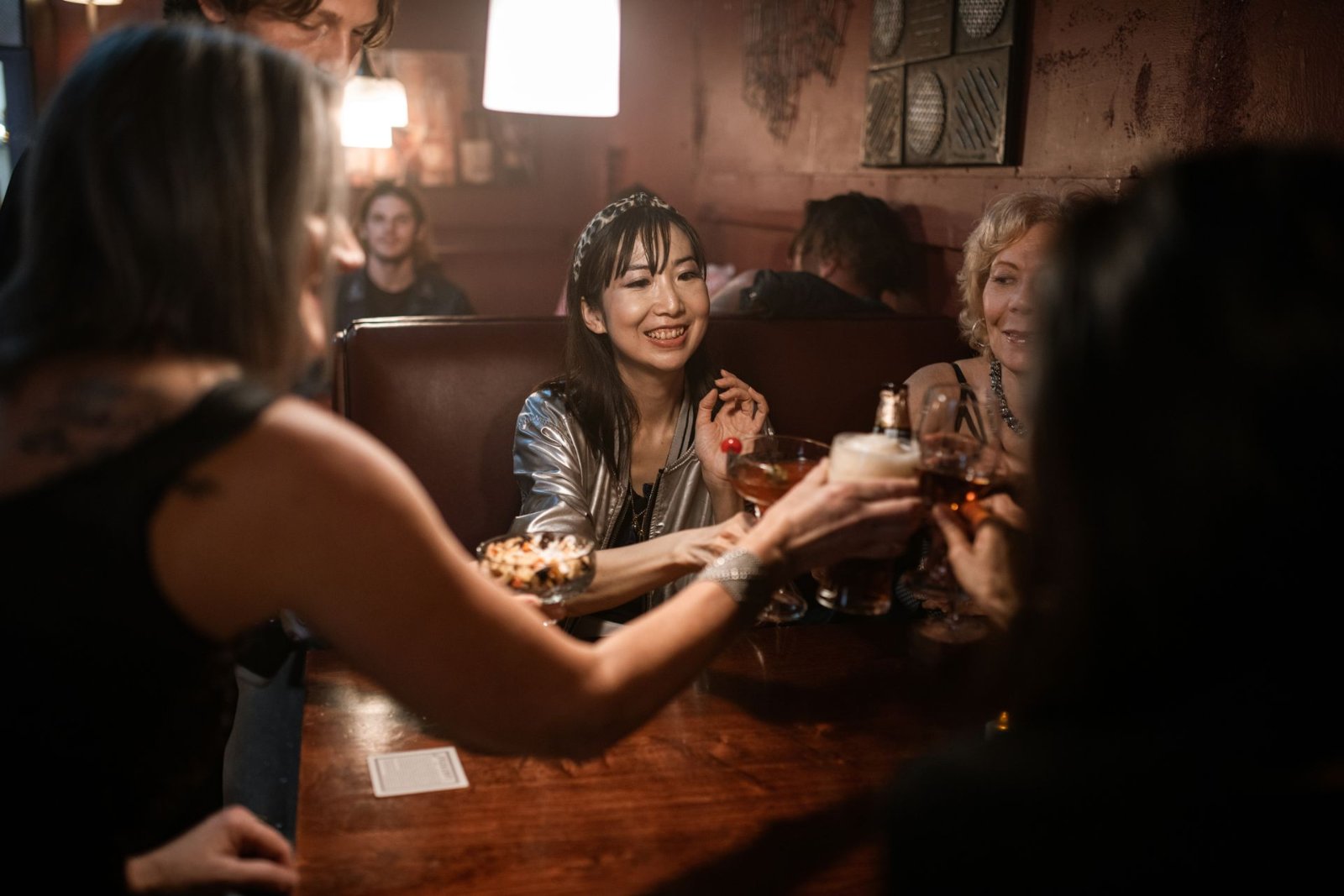
Every October, the streets of Chicago transform into something magical — a swirling parade of costumes, laughter, and social energy that seems to take on a life of its own. Halloween bar crawls have become one of the city’s most beloved seasonal traditions, drawing thousands of participants through neighborhoods like Wicker Park, Lincoln Park, and River North. But beyond the fun and festivities, something genuinely fascinating is happening inside your brain during these events. The social interactions you experience on a Halloween bar crawl trigger a complex neurochemical cascade that can have surprisingly meaningful effects on your emotional regulation and relationship satisfaction — effects that linger long after the costumes are packed away.
This article explores the science behind what happens in your brain and body during high-energy, costumed social events, why those effects are particularly potent during Halloween bar crawls, and how experiences like those offered by Barcrawlerz in Chicago may be doing more for your mental and emotional health than you ever realized. Buckle up — this is going to be a fascinating ride through neuroscience, social psychology, and the surprisingly deep benefits of dressing up like a vampire and bar-hopping through the Windy City.
Understanding the Neurochemical Landscape: What Happens in Your Brain During Social Events
Before we dive into the Halloween-specific elements, it’s worth building a foundation of understanding around the neurochemical processes that underlie all social interaction. Human beings are deeply social creatures, and our brains are literally wired to respond to connection with other people. When we engage in positive social interactions, a complex symphony of neurotransmitters and hormones is set into motion.
The Big Four: Dopamine, Serotonin, Oxytocin, and Endorphins
These four neurochemicals are the primary players in the social interaction story, and they each contribute something unique to the experience:
Dopamine is often called the “reward chemical.” It’s released in anticipation of pleasurable events and during the events themselves. When you’re planning a Halloween bar crawl, buying your costume, and counting down the days, your brain is already releasing dopamine. This is why anticipation feels so good — your reward system is already firing.
Serotonin is the mood stabilizer, the chemical that helps you feel a sense of belonging and social status. Interestingly, serotonin levels are directly influenced by how connected we feel to others. When you’re surrounded by a group of people who are laughing, engaged, and welcoming — exactly the atmosphere cultivated at a well-organized bar crawl — serotonin production gets a meaningful boost.
Oxytocin, sometimes called the “bonding hormone” or “love hormone,” is released during physical touch, eye contact, and moments of shared experience. A Halloween bar crawl is essentially an oxytocin factory — you’re sharing a unique, playful experience with dozens or hundreds of other people, many of whom are strangers who quickly begin to feel like friends.
Endorphins are the body’s natural painkillers and euphoria-inducers. Laughter — and Halloween bar crawls produce a LOT of laughter — is one of the most powerful endorphin triggers known to science. When you and a stranger both burst out laughing over matching costumes or an inside joke that develops spontaneously over the course of an evening, your endorphin levels spike in a way that creates genuine feelings of warmth and connection.
The Compounding Effect: Why Social Events Are More Than the Sum of Their Parts
What makes a Halloween bar crawl neurochemically unique is not just that it triggers these chemicals — it’s that it triggers all of them simultaneously, repeatedly, and in a context that is specifically designed to lower social inhibitions and encourage genuine connection. The compounding effect of multiple neurochemical releases over the course of several hours creates what neuroscientists sometimes call a “social high” — a state of elevated mood, heightened empathy, and increased openness to new experiences that can persist for days after the event itself.
“The brain doesn’t distinguish between ‘real’ social connection and playful, costumed social connection. What it responds to is the quality and intensity of the interaction — and Halloween bar crawls are specifically designed to maximize both.” — Social Neuroscience Research Perspective
The Halloween Factor: Why Costumes and Shared Themes Amplify the Neurochemical Response
Here’s where things get really interesting. Halloween bar crawls aren’t just any social event — they have specific elements that amplify the neurochemical response far beyond what you’d experience at a typical night out. The costume element, in particular, plays a fascinating psychological role.
The Psychology of Costume-Wearing and Identity Flexibility
Psychologists have long studied the phenomenon of “costume cognition” — the way wearing a costume temporarily shifts our self-perception and behavior. When you put on a costume, you’re not just changing your appearance; you’re giving yourself permission to temporarily inhabit a different identity. This has profound effects on social behavior.
Research in social psychology has shown that people in costumes are more likely to initiate conversations with strangers, take social risks, express humor, and engage in playful behavior. This isn’t just because they feel anonymous — it’s because the costume creates a kind of psychological “permission slip” that lowers the social anxiety that normally inhibits genuine connection.
In Chicago, where the social scene can sometimes feel competitive or cliquish (let’s be honest — every major city has this quality), the Halloween bar crawl costume culture creates a powerful equalizer. When everyone is dressed as a zombie, a superhero, or a pop culture character, the usual social hierarchies dissolve. The CEO in the Dracula cape and the grad student in the DIY ghost costume are suddenly on exactly the same social footing.
Shared Context and the “We’re All in This Together” Effect
Social psychologists refer to “shared context” as one of the most powerful drivers of rapid social bonding. When two strangers find themselves in the same unusual, memorable situation, they form bonds much more quickly than they would through conventional social interaction. A Halloween bar crawl is a masterclass in shared context creation.
You’re all navigating the same route, experiencing the same venues, reacting to the same costumes, and participating in the same collective adventure. This shared narrative — even when it’s only a few hours old — creates a sense of “in-group” belonging that triggers oxytocin release and builds the kind of social trust that normally takes much longer to develop.
Barcrawlerz, one of Chicago’s premier Halloween bar crawl organizers, has built their events around exactly this principle. By creating a structured but spontaneous social environment — with curated venues, themed activities, and a route that encourages interaction — they’ve essentially engineered an experience that maximizes the neurochemical benefits of social connection. Participants aren’t just bar-hopping; they’re co-creating a shared story that their brains will file away as a genuinely meaningful social experience.
The Neurochemical Cascade: A Deeper Look at What’s Actually Happening
Let’s get a little more specific about the cascade itself — the sequence of neurochemical events that unfolds over the course of a Halloween bar crawl and why that sequence matters for long-term emotional health.
Phase One: Anticipation and Pre-Event Dopamine Release
The neurochemical benefits of a Halloween bar crawl actually begin days or even weeks before the event. As you plan your costume, coordinate with friends, and look forward to the experience, your brain’s dopamine system is already activated. This anticipatory dopamine release is associated with improved mood, increased motivation, and a sense of positive expectancy that can counteract stress and anxiety in the days leading up to the event.
For Chicagoans navigating the pressures of work, city life, and the transition into colder autumn months, this pre-event dopamine boost can be a genuinely valuable mental health resource. Having something to look forward to — something playful and social — is one of the most evidence-backed strategies for maintaining positive mood and emotional resilience.
Phase Two: The Social Warm-Up — Early Venue Interactions
When the bar crawl begins and participants start gathering at the first venue, a second neurochemical phase kicks in. The initial awkwardness of arriving and finding your social footing triggers a mild cortisol response — the same stress hormone that activates in any new social situation. But here’s the key: in a Halloween bar crawl context, this cortisol spike is quickly countered by the costume effect, the shared context, and the immediate availability of social interaction.
As you start chatting with other participants, complimenting costumes, and finding your rhythm, the cortisol drops and the dopamine-serotonin-oxytocin combination begins to rise. This transition from mild social anxiety to social ease is itself neurochemically significant — your brain registers the successful navigation of a social challenge, which reinforces confidence and social self-efficacy.
Phase Three: Peak Social Flow — The Endorphin and Oxytocin Surge
As the evening progresses and social connections deepen, the neurochemical profile shifts again. Laughter becomes more frequent and more genuine. Physical contact — high-fives, hugs, the casual touch on the arm that signals real connection — increases. The shared experience accumulates meaning and narrative richness.
This is when the endorphin and oxytocin surge really hits its peak. Neuroscientists have found that sustained positive social interaction over several hours produces oxytocin levels comparable to those seen in close friendship and family bonding. In other words, a well-executed Halloween bar crawl can produce the neurochemical signature of genuine, meaningful social connection — even between people who were strangers at the start of the evening.
“Oxytocin doesn’t care whether you’ve known someone for twenty years or twenty minutes. It responds to the quality of the connection in the present moment — to the laughter, the eye contact, the shared experience, and the feeling of being genuinely seen and welcomed.”
Phase Four: The Afterglow — Serotonin Stabilization and Memory Consolidation
In the hours and days following a Halloween bar crawl, the brain enters what we might call the “afterglow” phase. Serotonin levels, elevated by the social experience, help stabilize mood and create a sense of general well-being. The memories of the evening — which are encoded with emotional richness due to the oxytocin and endorphin involvement — are consolidated in a way that makes them particularly vivid and positive.
This memory consolidation is crucial for understanding the long-term impact of the experience. The brain doesn’t just remember what happened; it remembers how it felt, and those emotional memories become part of the neural architecture that shapes how you approach future social situations.
Long-Term Impact on Emotional Regulation: The Science of Social Memory
Now we arrive at one of the most fascinating and least-discussed aspects of Halloween bar crawl participation: the long-term effects on emotional regulation. This is where the neurochemical cascade we’ve been describing starts to have genuinely lasting consequences.
How Positive Social Memories Reshape Emotional Baselines
Emotional regulation — the ability to manage and respond to emotional experiences in healthy, adaptive ways — is not a fixed trait. It’s a dynamic capacity that is shaped by experience, and particularly by social experience. When we accumulate positive social memories, we’re not just building a pleasant mental scrapbook; we’re literally reshaping the neural pathways that govern how we respond to stress, uncertainty, and interpersonal challenge.
Research in affective neuroscience has shown that people with rich libraries of positive social memories demonstrate greater emotional resilience, more flexible stress responses, and a stronger capacity for empathy and perspective-taking. They’re better able to “reach for” positive emotional states when under stress, because their brains have well-worn neural pathways leading to those states.
A Halloween bar crawl, particularly one that produces the full neurochemical cascade we’ve described, contributes meaningfully to this library. It becomes a reference point — a vivid, emotionally rich memory that the brain can draw on during more challenging times. In Chicago, where winters can be long and socially isolating, having these warm, connection-rich autumn memories can serve as a genuine emotional resource.
The Role of Novelty in Emotional Flexibility
One of the key ingredients in the Halloween bar crawl experience is novelty — the unusual costumes, the unexpected conversations, the new venues, the spontaneous moments that couldn’t have been planned. Novelty is neurochemically significant because it activates the brain’s dopaminergic novelty-detection system, which is associated with learning, adaptability, and cognitive flexibility.
When we regularly expose ourselves to novel, positive social experiences, we train our brains to be more comfortable with uncertainty and more open to unexpected connections. This translates directly into improved emotional regulation — specifically, the ability to approach new or challenging situations with curiosity rather than anxiety.
Barcrawlerz events in Chicago are designed with this novelty principle in mind. Each year, the routes, themes, and activities evolve, ensuring that even returning participants encounter genuinely new experiences. This commitment to novelty isn’t just good event planning — it’s neurologically beneficial for participants.
The Relationship Satisfaction Connection: How Bar Crawl Social Experiences Improve Your Closest Bonds
Perhaps the most surprising finding in the research on social experience and neurochemistry is the connection between high-quality social events and relationship satisfaction — not just with new acquaintances, but with existing romantic partners, close friends, and family members.
The Spillover Effect: How Social Confidence Transforms Intimate Relationships
When we have positive social experiences that boost our confidence and social self-efficacy, those benefits don’t stay contained to the context in which they were generated. They spill over into our closest relationships. People who feel socially confident and connected are better communicators, more generous in their interpretations of their partners’ behavior, and more resilient in the face of relationship conflict.
The Halloween bar crawl experience, by creating a context in which participants successfully navigate new social connections and experience genuine warmth and acceptance, can meaningfully boost social confidence. This confidence then becomes available in the home, in the office, and in the intimate spaces of our closest relationships.
Shared Experience as Relationship Glue
For couples and close friends who attend Halloween bar crawls together, the benefits are even more direct. Shared novel experiences are one of the most powerful tools for relationship maintenance and deepening. When partners or friends do something genuinely new and memorable together, they create what relationship researchers call “shared identity markers” — experiences that become part of the story of their relationship.
“Remember that Halloween bar crawl when we both showed up in the same costume?” or “That was the night we met those amazing people dressed as the entire cast of Schitt’s Creek” — these stories become part of the relational fabric that holds people together. They’re not trivial; they’re the connective tissue of long-term relationship satisfaction.
“Couples who regularly pursue novel, exciting experiences together report significantly higher levels of relationship satisfaction than those who rely primarily on familiar, routine activities. The brain’s novelty-reward system doesn’t distinguish between skydiving and a really well-executed Halloween bar crawl — both produce the kind of neurochemical excitement that can reignite relational spark.”
The Oxytocin Bridge: From Strangers to Partners to Deeper Connection
Here’s a particularly beautiful aspect of the Halloween bar crawl neurochemistry: the oxytocin released during interactions with strangers doesn’t disappear when those interactions end. It persists in the system and creates a kind of “oxytocin afterglow” that makes us more affectionate, more open, and more emotionally available to the people we’re closest to.
Partners who attend Halloween bar crawls together often report feeling unusually connected and affectionate in the days following the event. This isn’t coincidence — it’s the oxytocin bridge in action. The bonding chemistry activated by positive social interaction with others creates a neurochemical environment in which intimate connection feels easier, more natural, and more deeply satisfying.
Chicago’s Unique Social Landscape and Why Halloween Bar Crawls Hit Different Here
Chicago is a city with a particular social character — warm and community-oriented in ways that distinguish it from other major American cities, yet also vast and sometimes overwhelming in its scale. The city’s neighborhood culture means that people often feel deeply connected to their immediate community while sometimes struggling to expand their social circles beyond familiar territory.
The Neighborhood-Crossing Magic of the Bar Crawl Format
One of the things that makes a Chicago Halloween bar crawl particularly socially valuable is the way it draws people from across the city’s many distinct neighborhoods. On a Barcrawlerz event, you might find yourself chatting with someone from Hyde Park, a group of friends from Andersonville, and a couple who just moved to the West Loop — all in the same evening. This cross-neighborhood social mixing is rare in Chicago’s daily life, and it’s neurochemically significant because it expands social networks in ways that are associated with greater life satisfaction and even improved physical health.
Research on social network size and quality consistently shows that people with larger, more diverse social networks are healthier, happier, and more emotionally resilient than those with smaller, more homogeneous circles. Halloween bar crawls in Chicago are, in a very real sense, social network expansion events — and the neurochemical environment they create makes the connections formed there stickier and more likely to persist.
The Autumn Timing: Why October Is the Perfect Month for Social Neurochemistry
There’s also something to be said about the timing. October in Chicago is a transitional month — the gorgeous colors of autumn are at their peak, the weather is crisp and energizing, and there’s a collective awareness that the long winter is coming. This creates a psychological urgency to connect, to celebrate, and to create warm memories before the cold sets in.
This urgency is itself neurochemically relevant. When we feel a sense of temporal scarcity around a positive experience — the awareness that this particular window of opportunity won’t last forever — our brains tend to engage more fully and memorize more richly. The October Halloween bar crawl, happening at exactly this transitional moment, benefits from this heightened engagement and produces memories that are particularly vivid and emotionally resonant.
Practical Takeaways: How to Maximize the Neurochemical Benefits of Your Next Halloween Bar Crawl
Understanding the neuroscience is fascinating, but the real value lies in knowing how to apply these insights to get the most out of your Halloween bar crawl experience. Here are some evidence-based strategies for maximizing the neurochemical benefits:
Invest in Your Costume
The more thought and creativity you put into your costume, the more conversational opportunities you’ll create. A well-executed or cleverly conceptualized costume is a social invitation — it signals playfulness, creativity, and openness to interaction. This immediately lowers social barriers and accelerates the oxytocin-building process. You don’t need to spend a fortune; you need to invest genuine thought and personality.
Arrive with Openness, Not Just Your Friend Group
One of the most common mistakes at social events is arriving with a tight friend group and spending the entire evening exclusively within that group. This is comfortable but neurochemically limiting. Challenge yourself to have at least three genuine conversations with people outside your group. These are the interactions most likely to produce the oxytocin and serotonin boosts associated with expanded social connection.
Be Fully Present — Minimize Phone Use
The neurochemical benefits of social interaction require genuine presence. When we’re partially engaged with our phones, we’re reducing the quality of eye contact, diminishing our responsiveness to social cues, and limiting the depth of connection that’s possible. At a Halloween bar crawl, the photos can wait — the connection happening in real time is the neurochemically valuable part.
Reflect on the Experience Afterward
Memory consolidation is enhanced by conscious reflection. In the day or two following your Halloween bar crawl, take a few minutes to recall the best moments — the funniest encounters, the most genuine connections, the moments that made you feel most alive and connected. This deliberate recall strengthens the emotional encoding of those memories and amplifies their long-term impact on your emotional baseline.
Make It Annual
The neurochemical benefits of positive social experiences are cumulative. Each year that you participate in a Halloween bar crawl, you’re adding to a library of positive social memories that collectively shape your emotional regulation capacity and relationship satisfaction. Barcrawlerz makes this easy for Chicagoans by offering a reliably excellent annual event — one that you can look forward to, plan for, and add to your personal tradition.
Why Barcrawlerz Stands Out in Chicago’s Halloween Bar Crawl Scene
Chicago has no shortage of Halloween events, but Barcrawlerz has carved out a distinctive place in the city’s social calendar by prioritizing exactly the elements that maximize the neurochemical benefits we’ve been discussing. Their events are designed not just as bar-hopping routes but as genuine social experiences — with attention to venue selection, group energy, and the kind of structured spontaneity that allows real connections to form.
The Barcrawlerz approach understands, perhaps intuitively, what the neuroscience confirms: that the most valuable thing a social event can do is create the conditions for genuine human connection. When you strip away the pretension, the exclusivity, and the self-consciousness that can make urban social scenes feel alienating, what you’re left with is exactly what a Halloween bar crawl provides — a group of people, dressed in their most playful selves, sharing an adventure through one of the world’s great cities.
For Chicagoans looking to expand their social circles, deepen existing relationships, or simply give their neurochemistry a meaningful seasonal boost, a Barcrawlerz Halloween event is more than a party. It’s a scientifically sound investment in your emotional health and relational well-being.
Conclusion: More Than a Party — A Neurochemical Gift to Your Future Self
The next time someone asks why you’re so excited about a Halloween bar crawl, you can tell them the truth: you’re investing in your neurochemical health, your emotional regulation capacity, and your long-term relationship satisfaction. You’re participating in a tradition that your brain will thank you for — not just in the moment, but in the weeks, months, and years that follow.
The unexpected neurochemical cascade triggered by Halloween bar crawl social interaction is real, it’s significant, and it’s one of the most enjoyable ways to support your mental and emotional well-being that October has to offer. In Chicago, with the autumn leaves falling and the city alive with creative energy, events like those hosted by Barcrawlerz provide the perfect container for this experience.
So pick your costume with care, gather your people, and step out into the Windy City with an open heart and a curious mind. Your dopamine system is already anticipating the adventure. Your oxytocin is ready to flow. And somewhere in the neurochemical cascade that’s about to unfold, the seeds of deeper connection, greater emotional resilience, and more satisfying relationships are waiting to be planted.
Happy haunting, Chicago. Your brain is going to love every minute of it.